
If you’re serious about supporting your performance, it’s best to think bigger than just one good night of sleep or a single workout. The real key is a consistent, lifestyle-based approach. The most powerful strategy weaves together smart nutrition, targeted exercise, quality sleep, and stress management to build a rock-solid foundation for your well-being and performance.
A Realistic Blueprint for Supporting Your Routine

If you're looking for sustainable ways to support your energy and performance, you've come to the right place. This guide is all about getting past the quick fixes and diving into a realistic, interconnected game plan. We'll explore how integrating smart nutrition, strategic exercise, and quality recovery creates a powerful foundation for your well-being.
Think of this as your blueprint for building habits that support you in the gym and beyond. The focus is on consistency over intensity, because when these core pillars work together, they may help create an environment where your body can operate at its best.
The Four Pillars of Performance
Supporting your routine isn't about finding one secret weapon. It's about building a strong structure held up by four essential pillars. Each one influences the others, creating a positive feedback loop that strengthens your entire system over time.
- Smart Nutrition: Giving your body the right building blocks from whole foods.
-
Strategic Exercise: Using resistance training as a powerful stimulus for strength.
-
Quality Recovery: Prioritizing sleep and stress management to rebuild and recharge.
- Targeted Supplementation: Using specific ingredients to complement your foundational habits.
By dialing in these areas, you shift from chasing short-term results to building a long-term system for success. The goal is to create a routine that feels less like a chore and more like a natural part of your daily life.
This perspective is crucial. You can't neglect one area and expect the others to pick up the slack. A killer training program will never deliver its full potential without the right fuel and rest.
Why Consistency Beats Intensity
So many people fall into the trap of going all-out for a few weeks, only to burn out, give up, and lose progress. The approach we're about to break down is different. It's all about making small, sustainable changes that you can actually stick with for the long haul.
For example, instead of overhauling your entire diet overnight, you might start by simply making sure you get enough protein in every single meal. Rather than grinding out two hours in the gym every day, you could commit to three focused, 45-minute strength sessions per week.
This method is all about building momentum. Each positive habit makes the next one easier to adopt, creating a powerful cycle of progress. Over the next few sections, we’ll break down each of these pillars, giving you actionable steps and practical advice to help you build your own blueprint for lasting performance and vitality.
Building Your Performance Plate Through Smart Nutrition
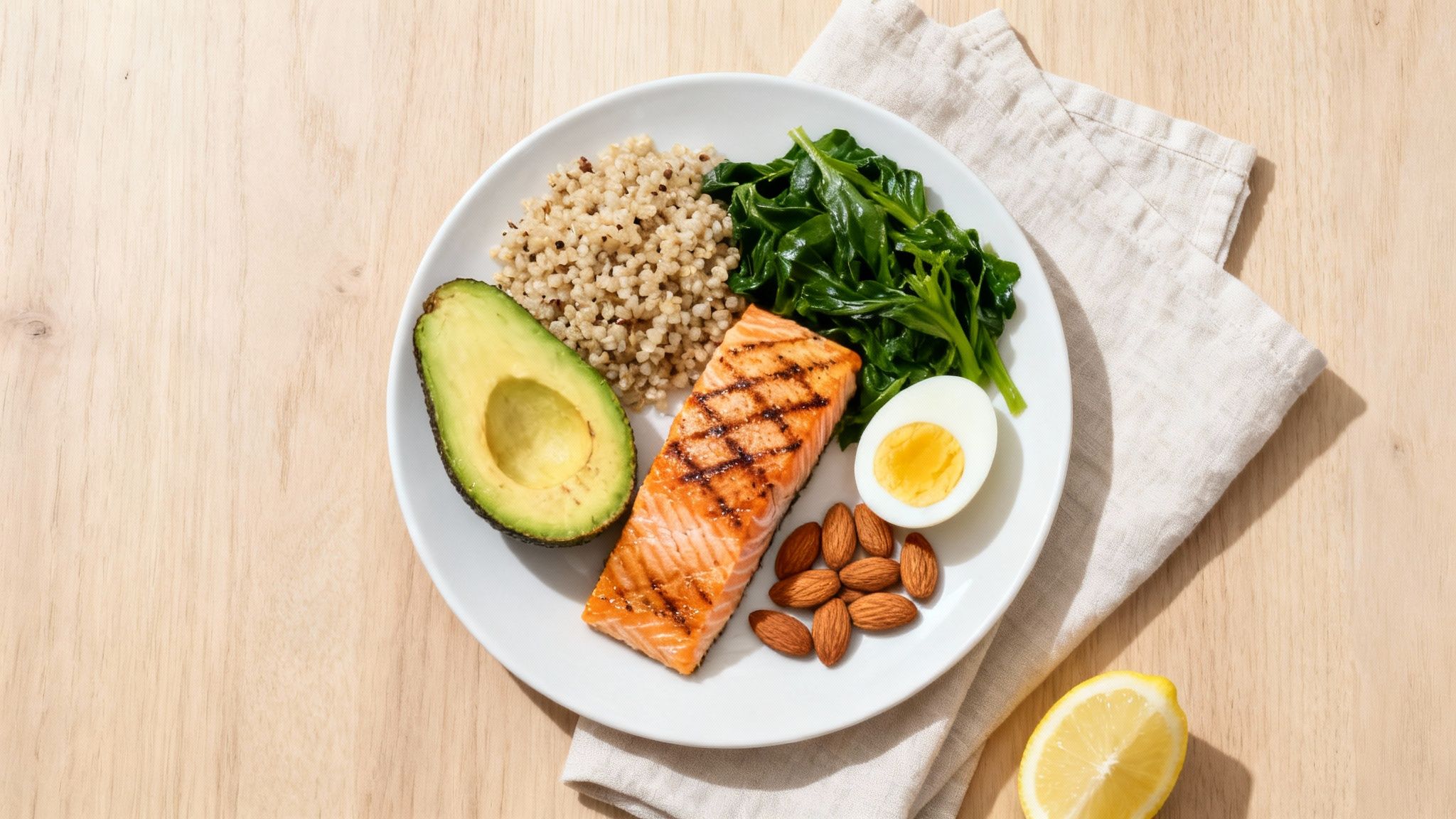
It’s a hard truth in the fitness world: you can't out-train a bad diet. What you put on your plate directly fuels your energy, recovery, and overall performance. Building a solid nutritional framework is a non-negotiable step in supporting your routine, and thankfully, it doesn’t require a ridiculously complicated or restrictive plan.
Forget chasing the latest fad diet. The most effective approach comes down to a balanced intake of high-quality macronutrients. It's about giving your body the fundamental building blocks it needs to thrive, both inside the gym and out.
Mastering Your Macronutrients
Your daily energy and ability to bounce back from tough workouts hinge on a steady supply of protein, fats, and carbohydrates. Each one has a unique and vital job to do in supporting a high-performance lifestyle. Think of them as the three pillars of your performance plate.
-
Quality Protein: This is the cornerstone for anyone serious about training. Protein delivers the amino acids required to repair and build muscle tissue after you've broken it down. Aim for clean sources like lean meats, fish, eggs, and Greek yogurt.
- Healthy Fats: Don't fear fat. Monounsaturated and polyunsaturated fats - the kind you find in avocados, nuts, seeds, and olive oil - are absolutely essential for countless bodily processes. They are a bedrock component of any diet focused on supporting a consistent routine.
- Complex Carbohydrates: Consider these your body’s premium fuel source. Complex carbs like sweet potatoes, oats, brown rice, and quinoa provide the sustained energy you need to power through demanding sessions and replenish your glycogen stores afterward.
This balanced strategy helps ensure your body has the fuel it needs to perform, recover, and adapt. Just as important, this approach may help support healthy blood flow and circulation, which you can dive deeper into by exploring the L-citrulline benefits for men in our detailed guide.
Don't Overlook Key Micronutrients
If macronutrients are the fuel, then micronutrients are the spark plugs. Specific vitamins and minerals play a surprisingly large role in supporting the systems that regulate your energy and performance. Making sure you get enough of them through whole foods is a simple but incredibly powerful strategy.
In particular, three micronutrients are constantly talked about in performance-focused circles for their well-known roles in supporting an active lifestyle.
Prioritizing nutrient-dense whole foods is the most reliable way to cover your micronutrient needs. While supplements can help fill gaps, a food-first approach builds the strongest foundation.
Paying attention to these small details can make a massive difference in your consistency and results over the long haul.
Your Performance-Focused Grocery List
To put this into action, we've created a simple table to guide your next grocery run. It breaks down key micronutrients, explains why they matter for an active lifestyle, and points you to exactly where to find them. This isn't an exhaustive list, but it's a fantastic starting point for building meals that actively support your goals.
Key Nutrients and Food Sources for Performance Support
This table is a quick-glance guide to the micronutrients you'll want to prioritize. Think of it as your cheat sheet for building a shopping cart that works as hard as you do.
| Nutrient | Role in a Performance Lifestyle | Excellent Food Sources |
|---|---|---|
| Zinc | A key mineral involved in countless enzymatic reactions within the body, commonly associated with supporting performance-focused routines. | Oysters, beef, pumpkin seeds, lentils, spinach. |
| Vitamin D | Often called the "sunshine vitamin," it plays a crucial role in many bodily systems and is frequently supplemented by athletes. | Fatty fish (salmon, mackerel), fortified milk, egg yolks. |
| Magnesium | An essential mineral that supports muscle function, energy production, and quality sleep - all vital components of effective recovery. | Almonds, spinach, avocado, dark chocolate, black beans. |
Focusing on weaving these foods into your regular meals is a straightforward and effective way to ensure your nutrition is on your team. Building your plate with intention is one of the most powerful habits you can develop on your journey toward better performance.
Training Strategically for Strength and Performance

While smart nutrition builds the foundation, strategic training provides the powerful stimulus your body needs to grow and adapt. Let’s be clear: not all workouts are created equal. When your goal is to support your vitality, resistance training is the undisputed king. This isn't about spending endless hours in the gym; it's about training smarter.
Consistency and intelligent programming will always beat sporadic, all-out efforts. The right approach focuses on the movements that give you the most bang for your buck, creating a routine that supports sustainable progress, week in and week out.
The Power of Compound Movements
If you want to build real-world strength and get a robust response from your body, you absolutely have to prioritize compound exercises. These are the multi-joint movements that recruit huge amounts of muscle, forcing your body to work as a single, powerful unit.
Think of these as the big rocks you build your entire program around:
- Squats: The king of lower-body exercises, working your quads, hamstrings, glutes, and core.
- Deadlifts: A pure, total-body movement that forges raw strength through your entire posterior chain, back, and grip.
- Bench Presses: The classic upper-body push, targeting the chest, shoulders, and triceps.
- Overhead Presses: A fundamental lift for building strong, stable shoulders.
By focusing the bulk of your energy here, you create a far greater demand on your body than you ever could with isolation work like bicep curls. This high level of stimulus is a non-negotiable part of any program designed for serious strength and performance.
Applying Progressive Overload in the Real World
The single most important principle for getting stronger over time is progressive overload. It’s a simple concept: you have to continually increase the demands you place on your muscles. If you don't, your body has no reason to adapt, and you'll hit a wall.
But this doesn’t just mean piling more weight on the bar every single workout. There are several practical ways to make it happen:
- Increase the Weight: The most obvious method. Once you hit your target reps comfortably, add a small amount of weight.
- Increase the Reps: Instead of adding weight, grind out one or two more reps with the same load.
- Increase the Sets: If you normally do three sets of an exercise, try adding a fourth.
- Decrease Rest Time: Shortening your rest periods between sets makes the workout much harder without changing anything else.
For these core lifts, a solid goal is to work within the 3-5 set range, aiming for 6-12 repetitions per set. This sweet spot is widely recognized for building both strength and muscle size.
You don't need to try and max out every single session. Consistent, controlled progress - even if it’s just one extra rep or five more pounds on the bar - is the secret to long-term success.
Why Resistance Training is a Non-Negotiable
Lifting heavy weights is about so much more than just building bigger muscles; it's a powerful signal to your entire system. The act of heavy resistance training is intimately linked with the body's natural processes that support vitality.
When combined with consistent training and nutrition, this kind of activity may help support your performance markers over time. You can learn more about how resistance training is often discussed in the context of male performance by reviewing the research behind resistance training's impact.
This is exactly why a well-structured lifting routine is such a critical piece of the puzzle. It directly complements the nutritional and recovery strategies we've covered, creating a powerful synergistic effect. It’s not just about what you do in the gym, but how that work signals your body to adapt and become stronger.
Mastering Recovery with Better Sleep and Stress Management

All the hard work you put in at the gym is only half the battle. Your progress is built while you rest, not just while you train. This brings us to two of the most overlooked - and most powerful - pillars of performance: sleep and stress management.
You can have the perfect diet and the most intelligent training plan, but if you’re constantly short on sleep and running on fumes, you're just spinning your wheels. These two factors are critical for recovery, and mastering them is non-negotiable if you're serious about your vitality.
The Critical Importance of Quality Sleep
Sleep is when the real magic happens. It’s your body’s prime time for muscle repair, mental recovery, and regulating the systems that drive your progress. Getting enough deep, restorative sleep is one of the most effective strategies for showing up strong, day after day.
The fallout from poor sleep isn't just about feeling tired; it directly impacts your body's ability to operate at peak capacity. Aiming for a solid 7-9 hours a night isn't a luxury - it's essential maintenance for a consistent routine.
Actionable Tips for Better Sleep Hygiene
Improving your sleep doesn't have to be complicated. It’s all about creating a consistent routine that signals to your body that it’s time to power down. Small, consistent changes can make a massive difference.
- Create a Wind-Down Routine: An hour before bed, kill the screens. The blue light from your phone and TV can interfere with your natural sleep cycle. Instead, read a book, listen to some chill music, or do some light stretching.
- Optimize Your Bedroom: Think of your room as a sleep cave. Keep it cool, dark, and quiet. Blackout curtains, a white noise machine, or earplugs are your best friends here.
- Be Consistent with Timing: Try to go to bed and wake up around the same time every single day - even on weekends. This helps get your body’s internal clock locked in.
Treat these habits like part of your training. You schedule your workouts, right? It's time to start scheduling your recovery with the same discipline.
Sleep isn't a passive activity; it's an active state of recovery. Prioritizing it is one of the highest-impact decisions you can make for your performance in and out of the gym.
Managing Stress to Protect Your Progress
Chronic stress can be a major roadblock to progress. When you’re constantly wound up, your body produces excess cortisol, a stress hormone that can work against your goals. High cortisol levels can interfere with muscle growth, sleep quality, and energy levels.
The key is finding simple, sustainable ways to get a handle on your daily stress. You don’t need to meditate on a mountaintop for an hour a day to see benefits. It's the small, consistent actions that really move the needle. If you want a deeper dive, check out our guide on how to reduce cortisol naturally.
Effective stress management isn't about eliminating stress - that's impossible. It's about building the resilience to handle life's curveballs without letting them derail your progress.
Simple Stress Management Techniques
Integrating stress management into your daily life can be surprisingly easy. The goal is to find what works for you and make it a non-negotiable part of your routine.
Here are a few practical ideas to get you started:
-
Take a 10-Minute Walk: Seriously, just step away from your desk and get some fresh air. It does wonders for clearing your head and hitting the reset button.
-
Practice Mindful Breathing: When you feel that tension building, take five deep, slow breaths. A simple box breath - inhale for four seconds, hold for four, exhale for six - can instantly calm your nervous system.
-
Journal for Five Minutes: Before bed, get whatever is buzzing around in your head down on paper. This helps you process your thoughts so they aren't keeping you up all night.
By actively managing your sleep and stress, you complete the performance puzzle. You give your body the right environment to recover fully, adapt to your training, and come back stronger every single time.
How Herbal Supplements Can Complement Your Routine
Once you've got your diet dialed in, your training locked down, and your recovery on point, you’ve built the foundation. Only then does it make sense to start thinking about what else you can add to the mix. For some, this is the perfect time to bring in specific herbal supplements to complement all that hard work.
Let’s be clear: these ingredients aren’t magic. Think of them as tools to help keep your well-oiled machine running smoothly. They’re often included in performance stacks to support energy, drive, and the body's ability to handle tough training cycles. The goal is to enhance your foundational habits, not replace them.
Understanding Key Herbal Ingredients
When you start digging into natural supplements, a few botanicals pop up over and over again in conversations about performance. These herbs aren't new - they've been used for centuries in traditional practices and are now staples in modern supplement routines.
Three of the most popular ingredients you'll hear about are:
- Tongkat Ali (Eurycoma longifolia): A flowering plant from Southeast Asia, Tongkat Ali is commonly used by men looking to support their energy, stamina, and performance in the gym.
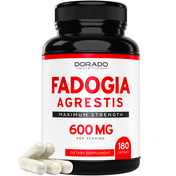
- Fadogia Agrestis: This is a shrub from West Africa that has become popular in fitness circles. It’s often added to supplement routines to support training goals and physical output.
- Shilajit: A powerful, tar-like substance from the Himalayan mountains, Shilajit is packed with fulvic acid and over 84 minerals. It's traditionally used to support energy, vitality, and overall wellness.
These ingredients are often taken by themselves or stacked together, as each one is thought to support a different piece of the performance puzzle.
The key to seeing how these supplements fit into your life is consistency. Just like your training and nutrition, they may work best when integrated into a steady, long-term routine.
The Role of Tongkat Ali in a Performance Stack
Tongkat Ali, often called Longjack, is arguably the most well-known herbal supplement in this category. It’s a staple for individuals looking for an edge in their training and daily life. For instance, Dorado Nutrition’s Tongkat Ali is a popular choice for those who want a simple, no-nonsense way to add this ingredient to their daily stack.
Its reputation comes from its traditional use for supporting vitality and vigor. In a modern fitness plan, it’s commonly used to help maintain the energy and drive needed to stay motivated and hit every workout with intensity. To learn more, you can review some of the research behind Tongkat Ali's impact here.
This is exactly why it's often the first supplement people reach for when rounding out a performance-focused lifestyle.
Integrating Shilajit and Fadogia Agrestis
While Tongkat Ali often gets the spotlight, Fadogia Agrestis and Shilajit play crucial supporting roles. They are frequently stacked with Tongkat Ali to create a more comprehensive approach to performance.
Fadogia Agrestis is particularly popular with strength athletes. Its traditional use is all about supporting physical output, making it a natural fit for anyone deep into a tough resistance training program. People see it as a direct complement to the work being put in under the barbell.
Shilajit, on the other hand, brings something different to the table. Its incredibly dense mineral profile is what makes it stand out. As a rich source of fulvic acid, it’s believed to help your body absorb other nutrients more effectively, which may support overall cellular function and energy production. To get a better sense of this unique substance, you can explore the benefits of Himalayan Shilajit.
When you combine all three, they cover multiple bases: Tongkat Ali for energy and drive, Fadogia Agrestis to support your training efforts, and Shilajit for foundational mineral support. It creates a synergistic stack that fits perfectly with a lifestyle built on solid nutrition, hard training, and smart recovery.
Common Questions, Straight Answers
When you start dialing in your routine, questions are bound to pop up. It’s a good sign - it means you’re paying attention. Below are some of the most common ones we hear, with clear, no-fluff answers to help you stay on track.
How Long Until I Start Seeing Results?
This is the big one, and the honest answer is: it all comes down to consistency. Your body doesn't run on a light switch; it adapts over time.
Most people report feeling a noticeable shift in energy, drive, and gym performance within a few weeks of locking in their diet, training, and sleep. The key is giving those good habits enough time to stack up and create real momentum.
When it comes to herbal supplements, patience is just as crucial. For ingredients like the ones from Dorado Nutrition, you should commit to a cycle of at least 8-12 weeks. This timeframe is long enough to align with a full training block, giving you a realistic window to see how they fit with your goals.
This isn't about finding a magic bullet. Think of it like building real strength in the gym. You don't get bigger after one workout. It’s the result of showing up week after week. The same exact principle applies here.
Can I Stack Tongkat Ali and Fadogia Agrestis?
Absolutely. "Stacking," or combining complementary supplements, is a smart strategy for hitting your goals from multiple angles. Many of the best ingredients out there are commonly used together, each one playing a different role.
- Tongkat Ali is often seen as the foundation of a solid stack, prized for its use in supporting drive, stamina, and that daily get-up-and-go.
- Fadogia Agrestis is typically added to directly support training goals and help you push your physical output during demanding workouts.
These two are a classic combination for a reason. They're synergistic, which is why brands like Dorado Nutrition often bundle them together for individuals serious about their performance. The goal is to build a more complete support system for an active, high-demand lifestyle.
That said, a good rule of thumb is to introduce one new supplement at a time. Give it a couple of weeks to see how your body responds before adding something else to the mix. And as always, running any new supplement plan by a healthcare professional is the smartest first move you can make.
Diet or Exercise: Which One Should I Tackle First?
This is the classic "chicken or the egg" debate. The truth is, diet and exercise are a team. They are infinitely more powerful together than they could ever be apart.
You can't out-train a bad diet, period. And even the most perfectly dialed-in nutrition plan needs the stimulus of hard training to translate into actual muscle and strength.
The most effective approach? Start with small, manageable wins in both areas at the same time. This keeps you from feeling overwhelmed and helps you build momentum that lasts.
For example, you could kick things off by:
-
Adding one high-protein meal to your day to make sure you’re giving your body the raw materials it needs to build.
-
Locking in two or three solid resistance training sessions per week to create that non-negotiable stimulus for growth.
Once those two things feel automatic, you build from there. The end game is to create a seamless system where your food fuels your workouts, and your training makes every nutrient count. It’s all about synergy, not choosing sides.
Ready to build a routine that supports your hard work? Dorado Nutrition offers premium herbal supplements like Tongkat Ali and Fadogia Agrestis designed to complement your performance-focused lifestyle.
Explore the collection and find the right fit for your stack.