
If you want to learn how to lower cortisol naturally, you’ve got to get serious about four key areas: smarter training, strategic nutrition, precision supplementation, and powerful lifestyle shifts. These pillars all work together to keep your body’s cortisol levels in check, which is absolutely critical if you want to unlock peak performance and recover like a pro.
Why Mastering Cortisol Is Your Performance Edge
Cortisol usually gets a bad rap as the "stress hormone," but it's actually a vital player in your day-to-day performance. It’s what helps you wake up feeling energized and powers your focus through a tough workout.
The real problem isn't cortisol itself; it's chronically elevated cortisol. Think of it as a silent saboteur that can seriously undermine all your hard work in the gym and kitchen.
When your cortisol levels are stuck in the "high" zone, your body is constantly in a state of "fight or flight." This triggers a cascade of negative effects that directly hit anyone serious about their physical and mental game.
- Impaired Recovery: Elevated cortisol keeps your body in a catabolic (breakdown) state, which gets in the way of muscle repair and glycogen replenishment. You won't just recover slower; you'll also be more susceptible to overtraining and injuries.
- Clouded Mental Clarity: The same hormone that gives you a short-term focus boost becomes a liability when it's always high. It can lead to brain fog, poor concentration, and that awful "wired but tired" feeling, making it impossible to perform at your best.
Managing cortisol isn't just a fluffy "stress reduction" tactic; it’s a non-negotiable strategy for optimizing your entire system. This quick visual breaks down the fundamentals you need to know.
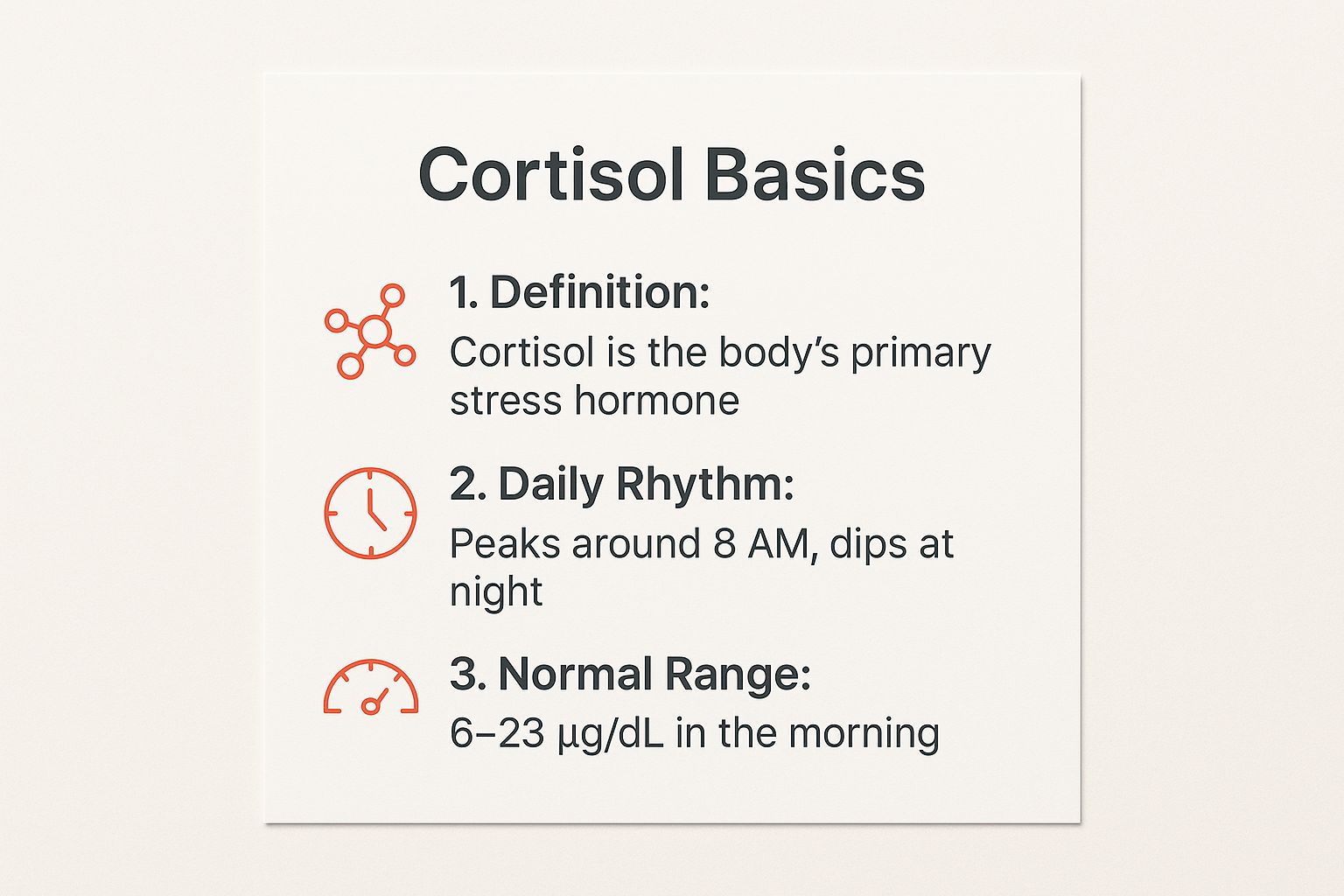
As you can see, cortisol is supposed to follow a natural daily rhythm and stay within an optimal range. It’s when we disrupt this delicate balance that performance issues really start to crop up. Now, let’s get into the high-impact strategies you can use to reclaim control and build a more resilient performance profile.
High-Impact Strategies for Natural Cortisol Control
To keep things simple, I've broken down the core pillars of natural cortisol management. This gives you a bird's-eye view of where to focus your efforts for the biggest returns.
Smarter Training
Prevents overtraining and supports recovery.
→ Incorporate deload weeks and balance intensity with active recovery.
Strategic Nutrition
Reduces inflammation and stabilizes blood sugar.
→ Prioritize whole foods and limit sugar and processed ingredients.
Precision Supplementation
Provides targeted nutritional support.
→ Consider adaptogens as part of your routine.
Lifestyle Shifts
Helps downregulate the nervous system.
→ Prioritize 7–9 hours of quality sleep each night.
Each of these strategies plays a distinct but complementary role. By addressing all four, you create a powerful, synergistic effect that helps bring your cortisol levels back into a healthy, performance-enhancing range.
Train Smarter Not Harder to Manage Cortisol
Your time in the gym can be your greatest ally or your worst enemy in the fight against high cortisol. While you need intense training to build strength and muscle, pushing way too hard for way too long is a surefire way to send cortisol through the roof. The key isn't to stop training hard; it's to train with intelligence.
Every solid lift creates a good kind of stress called eustress, which is the signal your body needs to adapt and grow stronger. But when you skip rest days, blow off recovery, and just redline your system every single session, you create distress. This chronic physical stress tells your adrenal glands to keep pumping out cortisol, locking you in a catabolic state that chews up muscle tissue and tanks your vitality.
Recognize the Signs of Overtraining
Spotting the signs of overtraining early is absolutely crucial for keeping cortisol in check. If you're constantly feeling beat down instead of energized after a workout, that's a massive red flag.
Pay attention to these key indicators:
- Persistent muscle soreness that just won't go away.
- A noticeable drop in your strength, endurance, or overall performance in the gym.
- Trouble falling asleep or waking up still feeling completely drained.
- Increased irritability, a short fuse, or just a general feeling of being wiped out.
Ignoring these signals is a fast track to burnout. If you feel like you're hitting a wall and just can't seem to make progress, your training might actually be working against you. For a deeper dive, check out our guide on how to break past your fitness plateau.
The goal is to stimulate, not annihilate. A productive workout should leave you feeling powerful and primed for recovery, not completely wrecked for days. Getting that distinction right is the foundation of smart, long-term training.
Balance Intensity with Active Recovery
Learning how to manage cortisol naturally means finding a sustainable balance in your training. High-intensity sessions are non-negotiable for making progress, but you must pair them with adequate recovery periods. This is where strategic deload weeks and active recovery become your best friends.
A balanced routine that mixes in aerobic activities like walking or cycling with your strength training can support recovery and stress management. Research shows that moderate-intensity exercise supports recovery and overall wellness and relieves muscle tension. But it’s a fine line; you have to avoid excessive high-intensity workouts, which can have the opposite effect and spike cortisol. You can learn more about how moderate exercise reduces stress hormones on bswhealth.com.
Try incorporating some low-intensity steady-state (LISS) cardio, like a brisk walk outside, on your off days. This simple habit can support recovery and improve blood flow, which speeds up recovery without piling more stress onto your system. This isn't about being lazy; it's about making a strategic choice to ensure every session builds you up instead of tearing you down.
Build an Anti-Inflammatory Performance Diet
What you put on your plate is one of the most powerful levers you have for controlling cortisol. Food can either douse the flames of inflammation or pour gasoline on them, which has a direct line to your body's stress response and overall wellness.
Foods packed with sugar, processed carbs, and industrial seed oils are notorious for kicking up systemic inflammation. This constant, low-grade internal stress is a signal for your body to pump out more cortisol, completely sabotaging your hard work in the gym.
The idea isn't to get restrictive. It's about making smart, strategic swaps - moving away from inflammatory triggers and loading up on nutrient-dense foods that support overall wellness.

Prioritize Blood Sugar Stability
Wild swings in your blood sugar are a massive source of physiological stress. Every time your energy crashes, your body releases cortisol to manage the chaos. Keeping your blood sugar steady is probably the single most effective dietary strategy for bringing cortisol down.
Build your meals around these core foundations:
- High-Quality Protein: Essential for muscle repair and keeping you full, protein barely moves the needle on blood sugar.
- Healthy Fats: Think avocado, nuts, olive oil, and fatty fish. These provide slow-burning energy and are essential for cellular function.
- Complex Carbohydrates: We’re talking sweet potatoes, oats, and quinoa. They digest slowly, giving you a steady fuel source without the sharp spikes and crashes you get from simple sugars.
By anchoring every meal with a solid serving of protein and healthy fat, you create a buffer that slows down how quickly carbs are absorbed. The result? A steady, reliable stream of energy all day long.
A meal that spikes your blood sugar is a meal that spikes your cortisol. Stabilizing your energy levels through smart food choices is a non-negotiable for anyone serious about male vitality and performance.
Micronutrients for Cortisol Regulation
Beyond the big three macros, certain micronutrients are the unsung heroes of your stress response system. Think of them as the support crew for your adrenal glands.
A few of the key players here include:
- Magnesium: It's often called the "calming mineral" for a reason. It helps regulate the HPA axis, which is basically your body's central command center for stress.
- Vitamin C: Your adrenal glands burn through a ton of vitamin C to produce cortisol. Making sure you have enough in your diet helps them function efficiently without getting overworked.
- B Vitamins: These guys are critical for energy metabolism and producing neurotransmitters, directly impacting your mood and how resilient you are to stress.
Strategic Nutrient Timing
When you eat can be just as important as what you eat.
Eating at consistent times helps regulate your body’s internal clock, which is tightly linked to cortisol's natural daily rhythm. On the flip side, skipping meals is seen by your body as a stressor, which can trigger an unwanted cortisol spike. For a deeper dive on this, check out our guide on https://doradonutrition.com/blogs/news/how-to-fix-your-circadian-rhythm.
You can also get tactical with your carbs. Timing your complex carbohydrate intake around your workouts can be a complete game-changer. Having some sweet potato or oats post-workout helps blunt the cortisol spike that comes from intense training. It also kickstarts the recovery process by refilling your muscle glycogen stores.
This simple tweak helps ensure your training sessions stay anabolic (muscle-building) instead of catabolic (muscle-wasting).
Unplug to Recharge Your System
In our hyper-connected world, your nervous system almost never gets a break. It's under a constant barrage of notifications, emails, and the ever-present blue light from screens. This creates a low-grade, chronic stress that keeps your cortisol faucet dripping all day long.
This constant stimulation undermines recovery and mental clarity. Learning how to manage cortisol naturally means you have to consciously create space to disconnect. This isn't about escaping to a remote cabin for a week; it's about building small but powerful habits into your daily routine to quiet that stress response and let your system finally recharge.

Embrace the Power of a Nature Break
One of the fastest ways to hit the reset button is simply to get outside. Spending time in a natural environment has been scientifically shown to have a profound and rapid effect on supporting stress management and recovery. It’s a dead-simple, high-impact strategy that requires no special equipment or intense effort.
A landmark study discovered that spending just 20 to 30 minutes in nature was the sweet spot for supporting stress management and recovery. The best part? The benefits were the same whether people were sitting or walking. You don't have to break a sweat to get the hormonal reward.
This makes it an incredibly accessible tool for anyone. A walk in a local park during your lunch break or just sitting in your backyard for 20 minutes after a workout can be enough to start reversing the damage of chronic stress.
Don't underestimate the impact of small, consistent actions. Swapping 20 minutes of screen time for 20 minutes of green time is one of the highest-ROI habits you can build for stress management and mental performance.
Implement Practical Mindfulness and Breathing
Beyond getting outside, you can support your body's stress response from anywhere using simple mindfulness and breathing techniques. These practices directly tap into your autonomic nervous system, shifting you from the sympathetic "fight-or-flight" state to the parasympathetic "rest-and-digest" state.
Here are a few actionable techniques you can use immediately:
- Box Breathing: A simple but powerful tool used by elite performers for a reason. Inhale for a count of four, hold for four, exhale for four, and hold for four. Just 3-5 minutes of this can instantly calm your entire system.
- Mindful Moments: Instead of scrolling through your phone, take one minute between sets at the gym or before a meeting to just close your eyes and focus on your breath. This brief pause helps break the cycle of constant mental chatter.
These aren't just feel-good exercises; they are direct interventions that help regulate your body's stress response. By integrating these unplugged moments into your day, you build a more resilient system, protecting your male vitality and ensuring your body is primed for growth and recovery.
Your Cortisol Questions, Answered
When you start digging into stress management and performance, a lot of questions pop up. Let's cut through the noise and get straight to the practical answers you need to manage cortisol and get back in the driver's seat.
How Long Does It Really Take to Lower Cortisol?
This all comes down to whether you're dealing with a quick spike or a chronic problem.
If you're just having a stressful moment, you can bring cortisol down in as little as 20 minutes. Simple things like a few rounds of deep breathing or a quick walk outside can provide immediate relief. Think of these as your in-the-moment tools.
But for chronically high cortisol, you need to play the long game. It takes consistency. You're looking at several weeks to a few months of dedicated effort—nailing your sleep, training smart, and using the right supplements—to see a real, lasting change. The payoff is huge: sustained energy, better recovery, and feeling like yourself again.
Will My Morning Coffee Spike My Cortisol?
It definitely can. Caffeine can trigger a temporary jump in cortisol, especially if you aren't a regular coffee drinker or if your system is already maxed out on stress. If getting cortisol under control is a serious goal, you need to be smart about your caffeine intake.
Here are a few tips to try:
- Delay Your First Cup: Your cortisol is naturally highest right when you wake up. Wait at least 90 minutes before having your first coffee to avoid piling on.
- Watch the Clock: An afternoon caffeine hit can mess with your sleep quality later that night. Poor sleep is a surefire way to wake up with elevated cortisol the next day, creating a vicious cycle.
- Tune Into Your Body: Pay attention to how you feel. For some people, simply cutting back or cycling off caffeine for a bit can make a world of difference in how their body handles stress.
Ready to build a more resilient system? At Dorado Nutrition, we provide premium, science-backed supplements to support your performance goals. Explore our full range of products designed for peak vitality, performance, and overall wellness today. Shop the complete Dorado Nutrition collection now.